
Da Chong Islet: A Unique Stop in Lan Ha Bay

Da Chong Islet is one of the distinctive natural sights travelers can encounter while exploring the waters around Lan Ha Bay and Cat Ba Archipelago. Known for its unusual rock formations, the area reflects the dramatic limestone geology that has shaped this part of northern Vietnam over millions of years.
Unlike destinations centered around large caves, beaches or organized activities, the appeal of Da Chong lies primarily in its natural form. Weathered rock, limestone cliffs and the surrounding seascape create a striking scene that can be appreciated as part of a cruise journey through the region.
For travelers planning a Lan Ha Bay cruise, Da Chong adds another visual highlight to a route already defined by limestone islands, quiet waterways and the landscapes of Cat Ba.
Where Is Da Chong Islet?
Da Chong Islet is located in the wider Cat Ba and Lan Ha Bay area of Hai Phong, northern Vietnam.
The destination forms part of the limestone landscape surrounding the Cat Ba Archipelago, immediately neighboring the famous Ha Long Bay region.
This location is important because Lan Ha Bay and Cat Ba should not be viewed as completely separate travel experiences. A cruise through the region can move between marine scenery, limestone formations and destinations associated with Cat Ba.
For travelers following a Lan Ha Bay travel guide, Da Chong is therefore best understood as one of the natural sights that can complement a wider exploration of the archipelago rather than as a standalone attraction requiring an entire day.
Its appeal comes from seeing it within the landscape around it.
Why Is It Called Da Chong Islet?
The name “Đá Chồng” can be understood in relation to the appearance of rocks seemingly stacked or balanced upon one another.
This unusual formation is the defining characteristic of the site.
From different viewing angles, the rocks can appear almost deliberately arranged, although their form is the result of natural geological processes.
That visual balance gives Da Chong Islet a distinctive identity among the many limestone formations around the region.

Northern Vietnam’s coastal karst landscape is famous for exactly this reason: water, weather and geological processes have gradually shaped limestone into cliffs, caves, towers and unusual formations.
Da Chong provides another example of how varied those natural forms can become.
What Makes Da Chong Islet Special?
Lan Ha Bay contains many impressive limestone islands, so what makes this particular place worth noticing?
Its unusual rock formation
The most obvious feature is the arrangement of the rocks themselves.
Their stacked appearance creates a recognizable silhouette that differs from the larger limestone towers commonly associated with Lan Ha Bay Vietnam.
The surrounding natural landscape
Da Chong should not be viewed only as an isolated rock formation.
The surrounding water, limestone scenery and changing light all contribute to the experience.
From a cruise vessel, the attraction becomes part of a larger panorama rather than a monument standing separately from its environment.
A natural rather than constructed attraction
There is no need for elaborate entertainment here.
The value comes from geology, landscape and observation.
For travelers searching for unique experiences in Vietnam, places like Da Chong are a reminder that some of the country’s most memorable sights have been shaped entirely by nature.
How to Experience Da Chong Islet
The most practical way to experience Da Chong Islet is as part of a cruise or wider journey around Lan Ha Bay and Cat Ba.
Unlike an attraction where travelers arrive, purchase a ticket and follow a fixed sightseeing route, Da Chong is better appreciated as part of the surrounding seascape.
Depending on the itinerary and current operating route, travelers may view the formation while cruising through the area or combine the journey with other nearby experiences.
This distinction is important.
If Da Chong is high on your list of Lan Ha Bay attractions, check the current cruise itinerary before booking rather than assuming every vessel follows exactly the same route.
Cruise routes may vary according to itinerary, Lan Ha Bay weather, tides, local regulations and operating conditions.
What to Do Around Da Chong Islet
Da Chong itself is primarily a scenic attraction, but a journey through the surrounding region can incorporate considerably more.
Enjoy the view from the cruise
Sometimes the simplest experience is the right one.
Find a comfortable position on deck or beside a panoramic window and watch the landscape change as the vessel moves through the area.
Different viewing angles can reveal very different shapes in the limestone formation.
Photograph the landscape
Da Chong’s unusual profile makes it an interesting subject for landscape photography.
The appearance can change according to sunlight, cloud cover and distance, while the surrounding water adds depth to the composition.
Early morning or late afternoon light can create particularly atmospheric scenes when conditions are favorable.
Combine it with kayaking
Kayaking is among the best things to do in Lan Ha Bay, although whether it takes place close to Da Chong depends on the specific cruise route.
Designated kayaking areas elsewhere in the itinerary allow travelers to experience the same limestone environment from water level.
Explore Cat Ba
A longer journey can continue beyond the marine landscape to Cat Ba Island, where travelers may encounter caves, beaches, villages and forest environments.
This creates a more varied itinerary than treating Da Chong as an isolated sightseeing stop.
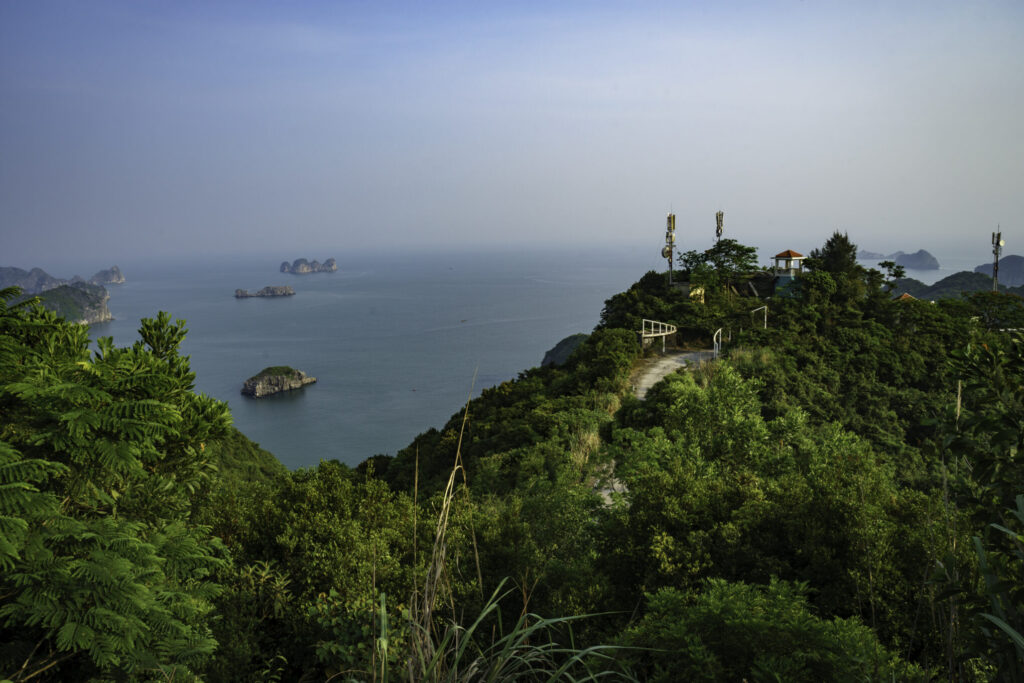

Da Chong Islet and the Landscape of Lan Ha Bay
One reason Da Chong is worth including in a Lan Ha Bay travel journey is that it helps travelers appreciate the geological character of the wider destination.
The beauty of Lan Ha Bay is not created by one famous landmark.
It comes from the repetition and variation of limestone formations across the entire landscape.
Some rise vertically from the water.
Others contain caves.
Some enclose quiet lagoons or beaches.
And places such as Da Chong attract attention through unusual shapes created by natural erosion.
This is also why cruising works so well here.
The journey between attractions can be just as visually interesting as the attractions themselves.
Rather than moving from one isolated landmark to another, travelers remain surrounded by the landscape throughout much of the voyage.
Da Chong Islet vs Other Lan Ha Bay Attractions
Each destination around Lan Ha Bay offers a different reason to visit.
| Attraction | Best known for |
|---|---|
| Da Chong Islet | Distinctive rock formations and scenery |
| Ao Ech | Kayaking and natural landscape |
| Dark & Bright Cave | Small-boat cave exploration |
| Ba Trai Dao | Beach scenery and swimming when conditions permit |
| Tra Bau | Kayaking and water activities |
| Viet Hai Village | Cycling and local landscape |
| Trung Trang Cave | Limestone cave exploration on Cat Ba |
This comparison reveals something useful when deciding what to do in Lan Ha Bay.
You do not need every stop to provide an activity.
A good itinerary should balance active experiences with time for observation and relaxation.
Da Chong belongs firmly in the second category.
Is Da Chong Islet Worth Visiting?
Yes, particularly if you enjoy natural landscapes, geology or photography.
But expectations matter.
Do not visit expecting a large tourist complex or several hours of organized activities. Da Chong Islet is compelling precisely because it remains a landscape experience.
It works particularly well as part of a broader cruise itinerary where different destinations provide different rhythms.
You might spend one part of the day kayaking, another exploring a cave and another simply watching unusual limestone formations pass from the deck.
That variety makes the overall journey stronger.
For travelers seeking unusual things to do in Lan Ha Bay, learning to appreciate the landscape between the major activity stops can be just as rewarding as another scheduled excursion.
How Long Do You Need to Explore the Area?
Da Chong does not require a dedicated multi-day trip.
Instead, consider how much time you want to spend exploring the wider Lan Ha Bay and Cat Ba region.
A 2 days 1 night Lan Ha Bay cruise provides enough time for a first introduction, typically combining cruising, excursions, evening activities and an overnight stay.
A 3D2N journey allows more time to explore Cat Ba and additional destinations without compressing every activity into a short schedule.
If Da Chong is specifically important to you, confirm whether it appears on or near the planned route before departure.
What Is the Best Time to Visit?
Like other attractions around Lan Ha Bay, the experience at Da Chong depends partly on seasonal conditions.
Spring and autumn are popular periods for comfortable outdoor sightseeing.
Summer provides warmer temperatures but also brings higher rainfall and the possibility of tropical weather.
Winter can be cooler and mistier, creating a more atmospheric appearance around the limestone formations.
There is no single perfect season for viewing Da Chong.
Clear sunlight can emphasize the rock structure, while mist and cloud can make the formation appear more dramatic.
Actual cruise operations remain subject to weather and local safety regulations throughout the year.
Experiencing Lan Ha Bay with Heritage Cruises Binh Chuan
Heritage Cruises Binh Chuan offers a boutique approach to exploring Lan Ha Bay and the Cat Ba Archipelago.
With 20 suites, the vessel combines the surrounding natural landscape with Vietnamese art, culture, cuisine and heritage-inspired hospitality.
This is particularly relevant for scenic destinations such as Da Chong.

Not every moment of a cruise needs to involve leaving the ship. Panoramic spaces and a slower cruising rhythm can make the vessel itself an excellent place from which to appreciate the limestone environment.
Depending on the selected itinerary and operating conditions, guests can combine scenic cruising with kayaking, cave exploration, Cat Ba experiences and cultural activities onboard.
For travelers considering a lan ha bay luxury cruise, the overall route should therefore be evaluated not only by how many attractions it includes but also by how much time it provides to actually experience them.
FAQs About Da Chong Islet
Where is Da Chong Islet?
Da Chong Islet is located within the wider Cat Ba and Lan Ha Bay landscape in Hai Phong, northern Vietnam.
Why is Da Chong Islet famous?
It is known for its distinctive natural rock formation, with rocks appearing to be stacked or balanced upon one another.
How can I visit Da Chong Islet?
The site is best experienced as part of a cruise or wider itinerary exploring Lan Ha Bay and Cat Ba. Check your current route because not every cruise follows the same itinerary.
What can I do at Da Chong Islet?
The main experiences are sightseeing and photography. Other activities such as kayaking may be included elsewhere in the surrounding cruise itinerary.
Is Da Chong suitable for a 2D1N trip?
Yes. It can form part of a wider 2D1N journey through Lan Ha Bay, depending on the specific cruise route.
Discover Da Chong Islet as Part of Lan Ha Bay
Da Chong Islet shows why exploring Lan Ha Bay is about more than visiting famous caves or beaches.
Its appeal lies in something simpler: an unusual natural formation surrounded by the limestone seascape of the Cat Ba Archipelago.
Rather than treating it as an attraction to rush through, take time to observe its shape from different angles and appreciate how it fits into the wider karst landscape.
Combined with kayaking, caves, Cat Ba exploration and time onboard, Da Chong can become one of many contrasting moments within a complete Lan Ha Bay journey.
Explore a lan ha bay luxury cruise with Heritage Cruises Binh Chuan or view the latest lan ha bay cruise 2026 itineraries to discover the landscapes of Lan Ha Bay and Cat Ba.


